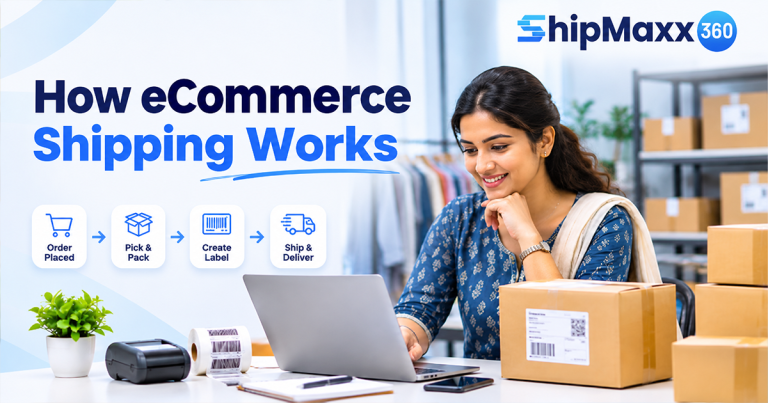


If you’re an online seller, you know the pain of getting everything right, be it marketing or sales, customer service, or eCommerce shipping. When an order gets placed, a customer’s job is done, but yours gets started, and never ends, even after the order has been delivered to the end customer’s doorstep.
In every business, hitting big growth numbers is fantastic. But getting those sales out the door on time and at a cost you can afford is where things get tough. The real struggle starts right there for you!
For eCommerce merchants, shipping isn’t just about dispatching an item. It’s the context around which they select the right courier partner, pack their products properly, monitor their journey, and manage returns or RTO orders. Shipping is the factor that decides your online business’s fate in the end. One delayed order, and everything starts falling apart.
A handful of simple D2C shipping practices can save you time, save you money, and improve customer satisfaction. So let’s get started!
9 Best Practices for Better eCommerce Shipping Strategy
1. Always Check Order Details Before Shipping
A typo in an address or a number can result in a failed delivery. Check the customer’s name, address, PIN code, and contact number before making the shipment. You should also check if the ordered product is in stock.
For orders with higher value or cash on delivery, rechecking the details with the customer can save you time and costs caused by any non-deliveries.
Quick Tip: Incorporate address verification into your order process.
2. Choose the Right Courier, Not Just the Cheapest
As an eCommerce seller, you must know that just because a shipping rate seems cheap doesn’t mean it’s the most economical and best for your business.
Various courier companies are available that charge various rates, guarantee various delivery times, and cover various PIN codes. A courier company that is effective in one location may not be ideal for another.
If you’re looking for a courier partner, consider all the factors like delivery speed, shipping cost, area covered, and past delivery record.
Partnering with a trusted eCommerce courier service provider can ensure that you’re not hindered by delays and provide an even better experience for the customer.
Quick Tip: It may be better to compare performance rather than prices.
3. Pack Products Properly and Check Their Weight
Product packaging is often not given enough attention by sellers, when it actually is the first impression they make on customers, especially first-time buyers.
While choosing the right packaging for your products, make sure that you look at the type of products to be shipped. Choose the right packaging material, and make exceptions for fragile products, because they’re gonna need extra padding for protection, like bubble wrap or honeycomb paper wrap, etc.
Further, properly weighing your parcel can save you from extra and unfair additional fees. Many eCommerce shipping partners will quote a price using either the gross weight of the parcel or the space occupied by the parcel, whichever costs more.
Quick Tip: Store one or two standard packaging sizes that are common for your products.
4. Make Courier Booking Easier
Ordering shipments individually may be extremely time-consuming as your order volume grows.
A shipping aggregator, also called a logistics aggregator, is someone that allows you to access a network of several courier service providers on one platform. By partnering with a shipping aggregator, you can get access to multiple courier options, book shipping, print labels, and manage orders – all in one place.
Quick Tip: Find a partner that lets you manage, ship, and track a courier from a single place and brings you multiple options to choose from.
5. Keep Customers Updated With Shipment Tracking
Customers are always eager to know where they’re going to get their orders and what the current status of their shipment is.
With real-time shipment tracking, they can keep an eye on their parcel from pickup to delivery. It also means sellers get fewer “Where is my order?” inquiries.
Quick Tip: Keep your customers in the loop about delays-don’t leave it to them to reach out to you.
6. Manage COD Shipping Carefully
Cash on delivery is a common and preferred payment method, but it has its own cons as well.
When using COD shipping, the buyer is charged at the moment of delivery. If they do not accept the parcel at that time or are not home, the seller might have to pay the return fee when the order is marked RTO. Select a COD courier service that provides transparent accounting and a schedule of payment.
Quick Tip: Keep an eye on COD delivery success rates and ensure that payments are cleared.
7. Act Quickly on Failed eCommerce Deliveries
If you think each order will get delivered on the first attempt, think again about it! It’s always possible that a customer might not be available at the time of delivery, the address might be wrong, or the delivery agent fails to find the location. That’s when NDR management comes in, which is a Non-Delivery Report that informs sellers of the reason a package was not delivered.
It should be your priority to keep your customers informed about the reason the shipment got delayed or couldn’t be delivered so that there is no scope for a communication gap. This approach can reduce the chance of higher RTO and improve delivery performance.
Quick Tip: Check daily for “failed delivery” reports to help reduce RTO percentage.
8. Connect Your Store With Your Shipping System
Entering the same order details again and again takes time and can lead to mistakes.
Many shipping tools can connect directly with your online store. A shipping API helps your store and shipping system share order and delivery details automatically.
Similarly, a courier API connects your shipping software with an eCommerce courier service. With the right shipping API integration, you can manage orders more easily without entering the same details multiple times.
Quick Tip: Choose a shipping platform that connects with your online store to save time and reduce manual work.
9. Review Your eCommerce Shipping Performance Regularly
Shipping is only the beginning of the package life cycle. See the number of on-time deliveries, the number of failed deliveries, and how much you are paid for each order. See how your couriers are performing and locations where delays are common.
No matter if you’re working with one or multiple providers, taking a look at your eCommerce delivery service performance can provide you with valuable insights into your shipping strategy.
Quick tip: Check on delivery charges, delays, and returns no more than once a month.
How Can ShipMaxx Help Sellers in Online Shipping?
It’s always a hassle and chaotic to get multiple orders and manage multiple couriers and the shipment process all together.
ShipMaxx by ShipMaxx360 addresses exactly this problem for you. It lets online sellers integrate their online store, pick a courier of their choice, book shipments, track orders, get AI-powered NDR resolution and system support, and have transparency about delivery tracking and end-to-end shipping operations.
This allows sellers to manage their shipping better by having less to do, instead of handling each shipping task individually.
To Conclude
Sometimes you don’t need a huge overhaul. All you need is to ensure smaller things are working well, such as address confirmation, proper packing, assigning the right courier, real-time tracking, active NDR support, etc., and this is enough to sort your eCommerce shipping process.
Tackle the biggest pain points first. Focus on strengthening the parts of your business that are causing the most issues. As demand builds, the right shipping practices and partners can speed up order processing, keep costs down, and improve customer satisfaction.
Sign up for free today on Shipmaxx360.com and know more about how we can power your shipping strategy.